The i-Ready Diagnostic has become one of the most trusted tools for measuring student learning across the U.S. As schools continue to emphasize data-driven instruction, the 2025 version of i-Ready brings a few important updates that both parents and educators should understand. Whether you are new to i-Ready or have used it for years, knowing how to read and use the scores is essential for student success. This guide will walk you through how the iready diagnostic scores 2025 works and how you can use it effectively.
What is i-Ready Diagnostic?
i-Ready Diagnostic is an adaptive assessment used in thousands of schools to measure students’ knowledge in Reading and Mathematics. It adjusts in real-time to each student’s performance, meaning the test gets easier or harder depending on the answers given. The purpose is not just to assign a score but to discover exactly what a student knows and what they need to work on.
The assessment is typically given three times a year:
- Beginning of the year (Fall)
- Mid-year (Winter)
- End-of-year (Spring)
This cycle helps track students’ progress, spot learning gaps, and provide targeted lessons throughout the school year.
Components of i-Ready Diagnostic Scores 2025
Scale Scores
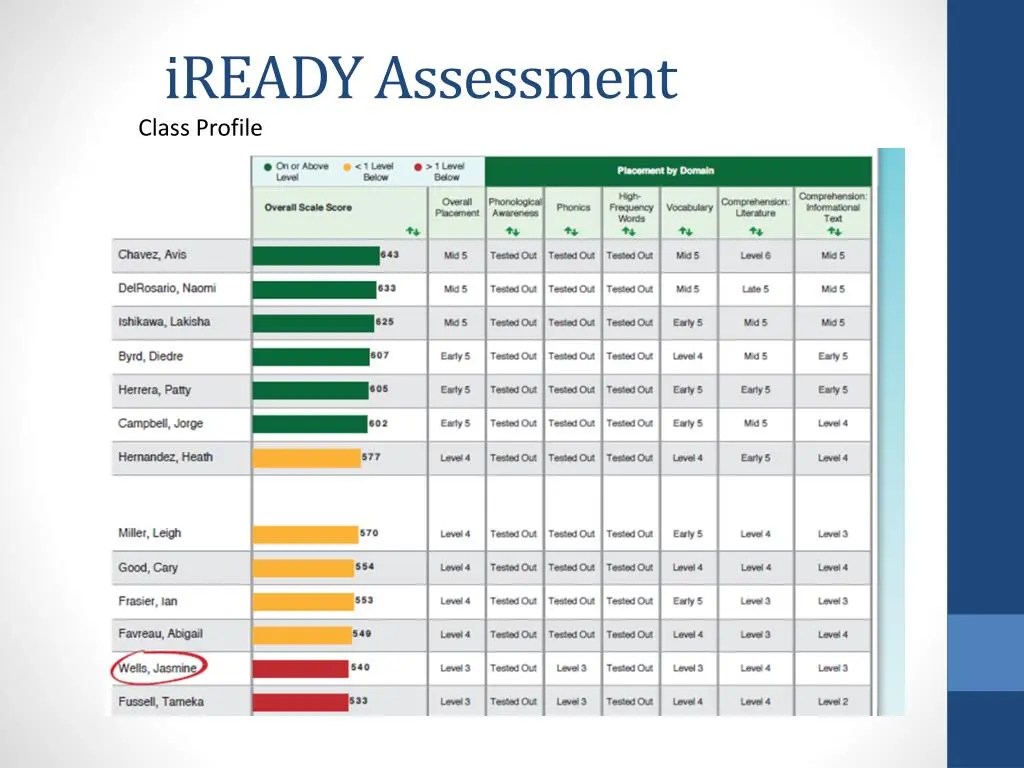
The i-Ready Diagnostic assigns a scale score after each test. In 2025, scale scores still range approximately between 100 to 800 for both Reading and Math. The scale score is not a “percentage” or “letter grade” — it is a developmental score that shows where the student currently stands, regardless of grade level.
For example, a student may receive a scale score of 510 in Reading. This number will be used to compare their score to:
- Grade-level expectations.
- Prior performance.
- Expected growth targets.
Placement Levels
Students are also given a placement level, which categorizes their performance into four ranges:
- Below Grade Level
- Approaching Grade Level
- On Grade Level
- Above Grade Level
In 2025, i-Ready has refined these placement levels to better reflect updated state and national learning standards. Placement levels help teachers quickly identify which students need additional support and which are ready for more advanced content.
Growth Targets: Typical and Stretch Growth
One of the most valuable parts of i-Ready scores is the inclusion of growth targets:
- Typical Growth: The amount of progress a student is expected to make in one school year.
- Stretch Growth: A more ambitious goal designed to help students who need to catch up or accelerate their learning.
In the 2025 update, i-Ready now provides even more customized growth goals, taking into account each student’s unique learning patterns and background data.
What’s New in i-Ready Diagnostic Scores for 2025?
i-Ready has introduced a few important changes for the 2025 academic year based on educator feedback and evolving academic standards.
More Accurate Placement
With updated curriculum guidelines, i-Ready adjusted its placement thresholds. Students will now receive more precise placement results, ensuring teachers can tailor instruction to their exact needs.
Improved Growth Reporting
The 2025 version features clearer and more detailed growth reports, showing not just if students met their goals, but how close they came, what contributed to their progress, and where additional support is needed.
Enhanced Parent Reports
i-Ready also improved the parent reports to make them easier to read and interpret. Parents will now find simplified explanations, visuals, and suggested activities to help their child at home.
How Teachers and Parents Should Use i-Ready Scores
For Teachers
i-Ready scores are essential for shaping instruction. Teachers can use the data to:
- Group students by skill levels.
- Identify which skills to focus on during small group or individualized lessons.
- Set realistic, yet challenging, academic goals for each student.
In 2025, i-Ready reports now come with suggested resources directly linked to areas where students need growth.
For Parents
Parents should view i-Ready results as a tool, not a judgment. A lower placement level simply means your child needs extra support in certain areas. The improved parent-friendly reports for 2025 give you specific ideas for:
- Practicing targeted skills at home.
- Asking meaningful questions during parent-teacher conferences.
- Encouraging and motivating your child during their learning journey.
Tips to Help Students Improve i-Ready Scores
Encourage Regular Practice
Frequent practice with i-Ready lessons and offline reading and math activities will help students strengthen their skills.
Create a Growth Mindset Environment
Remind students that the goal is growth, not perfection. Every improvement counts.
Work with Teachers
Collaborate with teachers to understand how you can help your child at home and what specific skills need attention.
Final Thoughts
The i-Ready Diagnostic Scores 2025 offer more than just numbers; they provide insight, direction, and opportunities for students, teachers, and parents to work together toward academic success. With its updated features, i-Ready remains a reliable tool for understanding student progress and guiding instruction. By using the data thoughtfully, students can make meaningful progress and reach their full potential.
 iReady Diagnostic Scores by Grade 2025-2026